Decoding Art Movements | Expressionism
"What is expressed is metaphorically exemplified. What expresses sadness is metaphorically sad. And what is metaphorically sad is actually but not literally sad; i.e., comes under a transferred application of some label coextensive with 'sad'." —— Nelson Goodman
"What is expressed is metaphorically exemplified. What expresses sadness is metaphorically sad. And what is metaphorically sad is actually but not literally sad; i.e., comes under a transferred application of some label coextensive with 'sad'."
—— Nelson Goodman (USA)
I. What is Expressionism?
Expressionism is one of the most significant modern art movements. It emerged and flourished in the early 20th century across Germany, France, Austria, the Nordic countries, and Russia. The term was first used in 1901 by French painter Julien-Auguste Hervé to distinguish his painting style from Impressionism. Later, many German artists made bold "innovations" in composition, technique, lines, and colors, gradually forming this distinct movement. Eventually, Expressionism expanded into other creative fields, including music, film, architecture, poetry, literature, and theater.
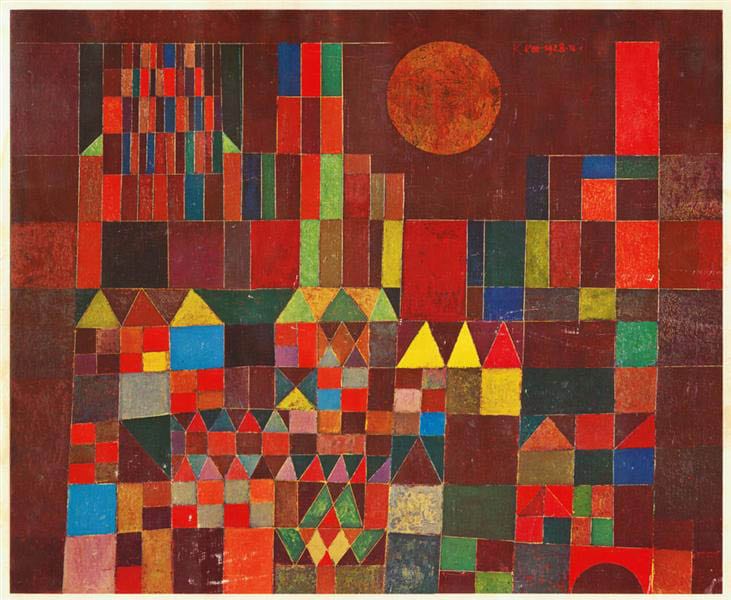
At its core, Expressionism is about artists prioritizing the expression of inner emotions rather than faithfully depicting the physical reality of a subject. As a result, the movement is often characterized by the distortion and abstraction of reality, frequently utilized to convey feelings of fear and angst. Because of this, it is rare to find Expressionist works with cheerful or joyful themes.
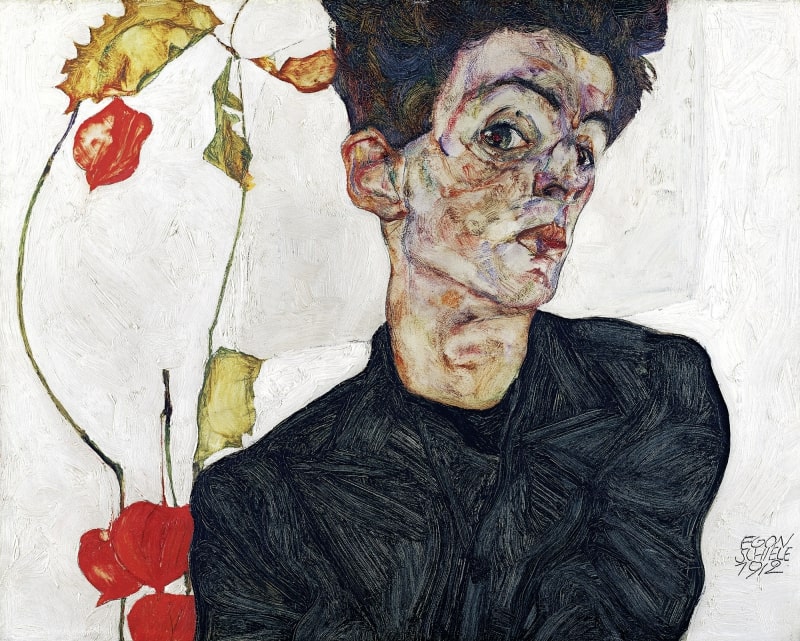
While Expressionism evolved from Impressionism and was heavily influenced by Vincent van Gogh, it fundamentally rebelled against the Impressionist commitment to objectively portraying nature. Unlike Impressionists, who received external stimuli and recreated them, Expressionist artists projected their own intense emotions into their paintings. Furthermore, the movement shares an intrinsic connection with German historical and cultural traditions, inheriting the German artistic traits of valuing individuality, emotional resonance, and subjective expression.
II. Artistic Characteristics of Expressionism
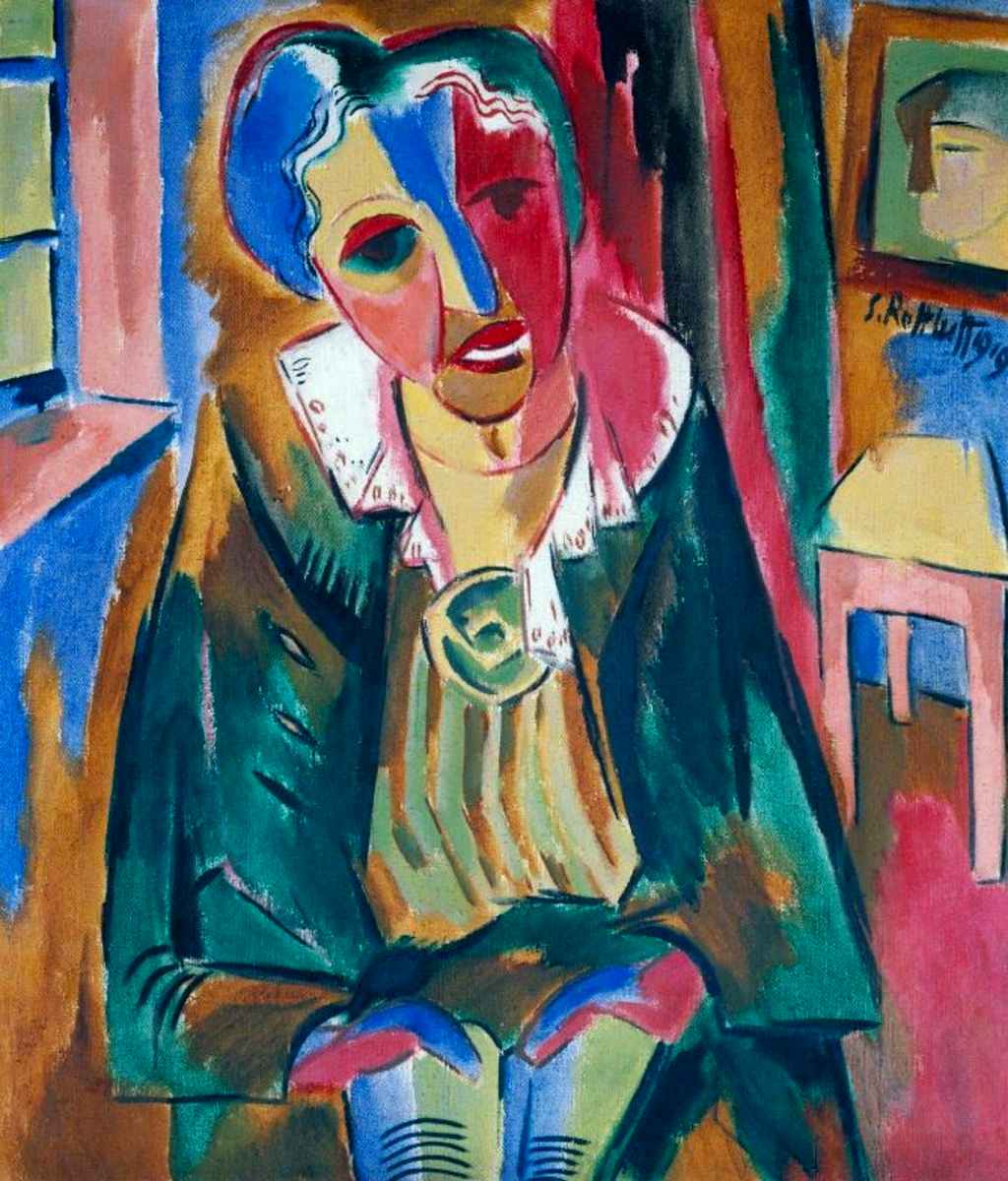
Intense Emotions: Expressionist paintings place a strong emphasis on inner feelings and moods. Profound emotions, especially pain and psychological turmoil, are laid bare through the artworks.
Exaggerated Forms: In terms of composition, Expressionism often pursues strong contrasts and distorted shapes, deliberately exaggerating the scale and proportions of objects.
Striking Colors: Expressionist painters frequently use thick, vibrant, and intense colors—such as bold reds, yellows, and blues—as a raw manifestation of genuine emotion.
Abstract Lines: In many Expressionist works, lines become abstract. Instead of representing specific objects or shapes, they serve purely as vessels for the artist to release emotional energy.
Profound Themes: The subjects of Expressionist paintings are closely tied to social and cultural issues. Their works often reflect the harsh realities of poverty, the brutality of war, and the hypocrisy of human nature.
III. Representative Artists
Edvard Munch
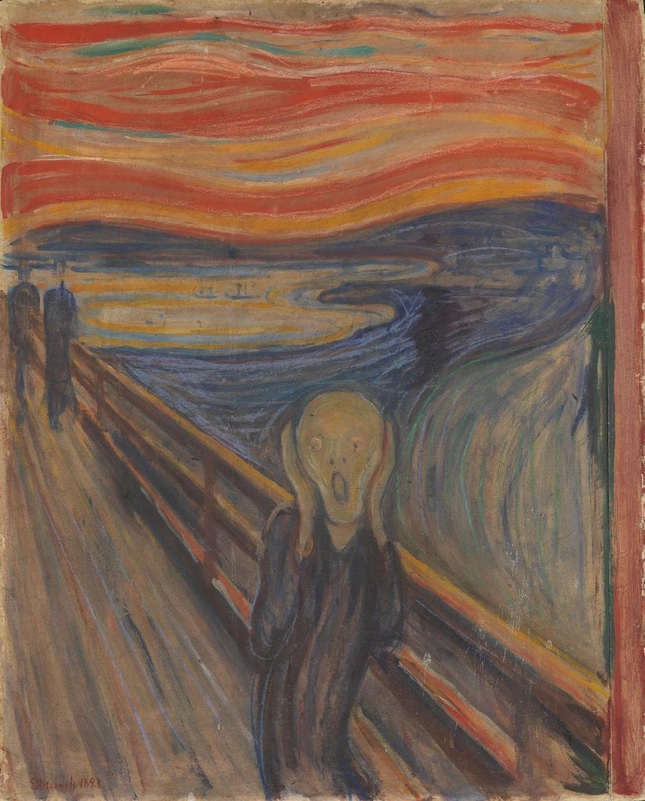
Edvard Munch (1863–1944) was a Norwegian Expressionist painter and printmaker, widely regarded as the "Father of Modern Expressionism." Munch's works predominantly revolve around themes of life, death, love, terror, and loneliness. He was a master of using highly contrasting lines and blocks of color to express his inner feelings, delivering a powerful visual impact of tension, anxiety, restlessness, paranoia, sorrow, and suppression. His most iconic works include The Scream, Despair, Anxiety, Ashes, The Dance of Life, and Evening on Karl Johan Street.Ernst Ludwig Kirchner
Ernst Ludwig Kirchner was a German Expressionist painter and a founding, core member of the artist group Die Brücke (The Bridge). In his art, Kirchner pursued simplified forms and vibrant colors, achieving a uniquely decorative, flat visual effect through his refined handling of shapes and hues. Deeply traumatized by his experiences in World War I, his works are filled with extreme tension conveyed through jagged lines and frantic brushstrokes. In a sense, the powerful visual tension in his art reflected his own mind, which was often on the verge of psychological collapse.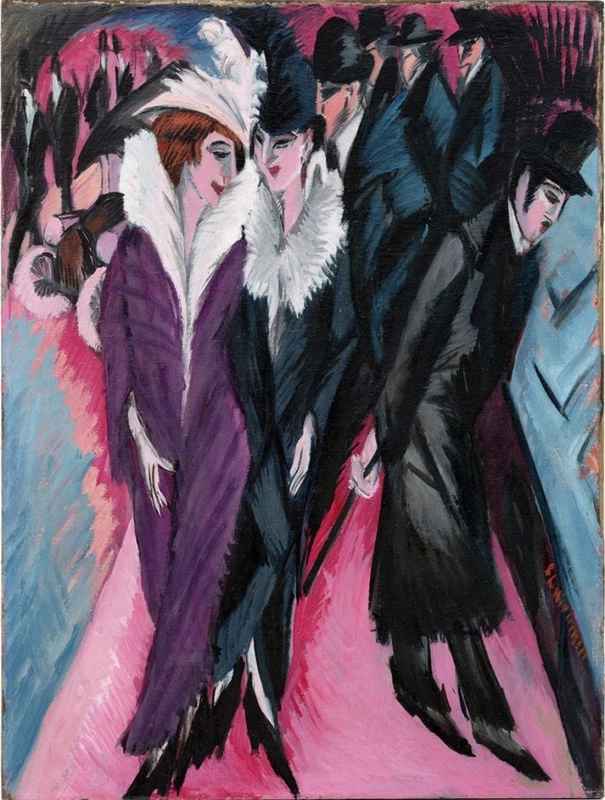
In the world of Expressionism, subjective emotion dictates every visual element, and the inner self is continuously amplified. Amidst a reality bound by strict rationality, Expressionism stands as a profound release from the inside out. It is exactly this pure emotional catharsis that has gifted humanity with so many extraordinary artistic masterpieces.










Further reading
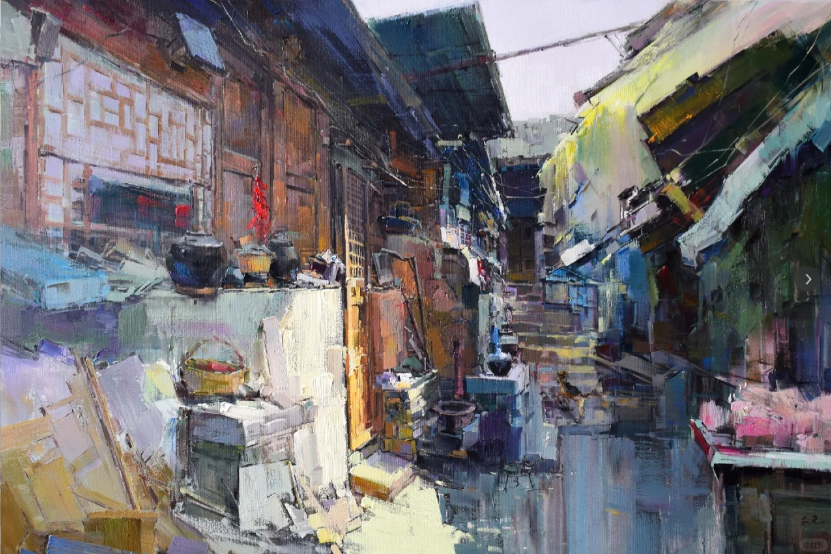
Artist of the Day | Zhao Yanliang
Zhao Yanliang was born in 1986 in Langfang, Hebei Province. He graduated from the Hebei Vocational Art College, pursued advanced studies at the Tianjin Academy of Fine Arts, and graduated from the Advanced Research Class of the Bai Yuping Studio at the Beijing Fine Art Academy in 2020.
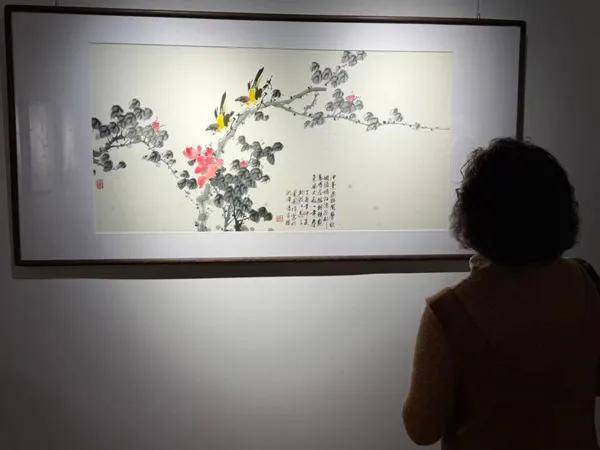
61 Works Showcase an Artistic Quest: "Endless Faint Fragrance – Zeng Jingxiang's Freehand Flower-and-Bird Painting Exhibition" Opens in Xiangtan
The exhibition features 61 of Zeng's freehand flower-and-bird works. It runs until November 21 and is open to the public free of charge.
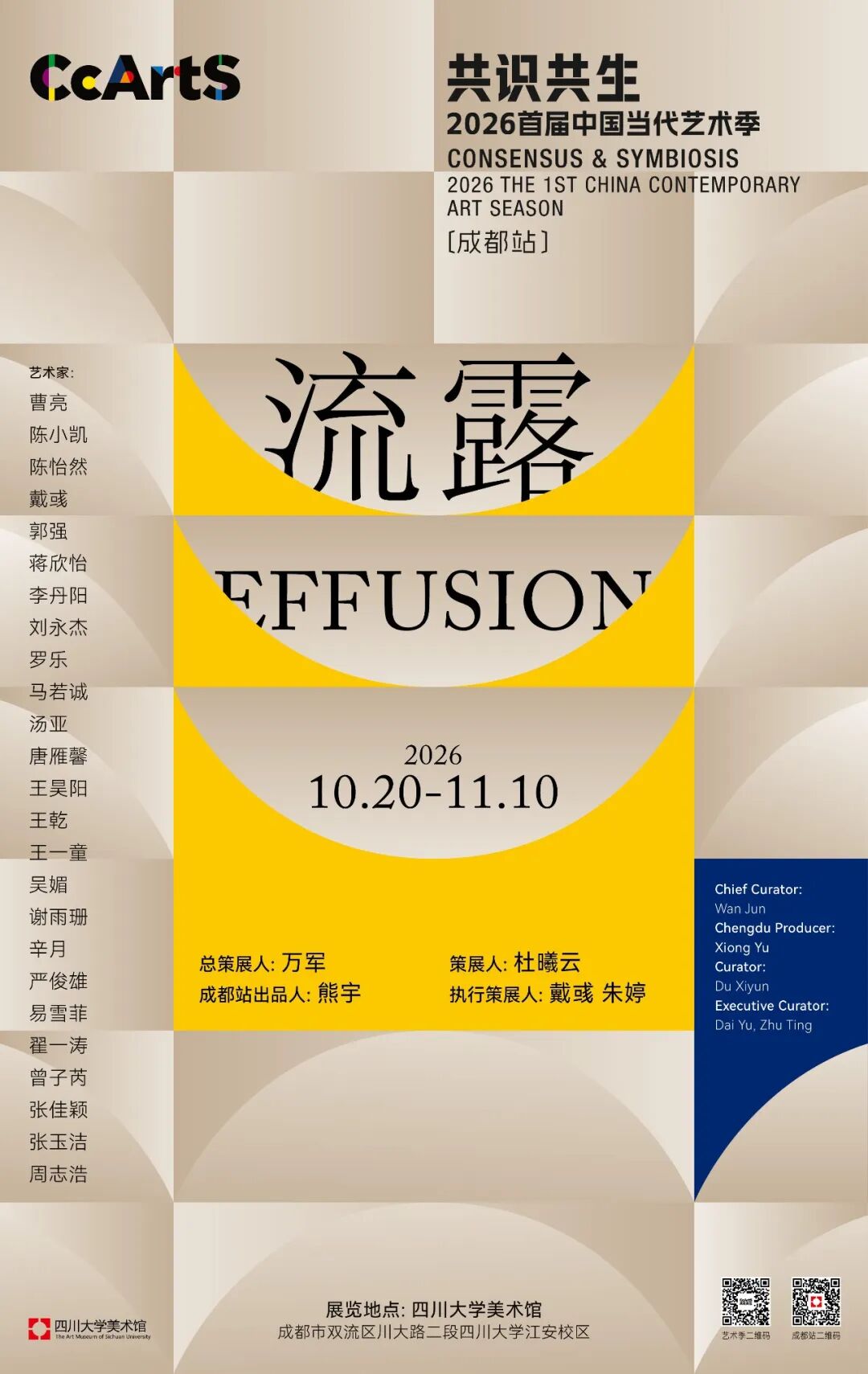
EFFUSION | Consensus and Symbiosis — The 1st Chinese Contemporary Art Season 2026 • Chengdu Station
We are living in an era of highly surplus visual information. Images are produced, disseminated, and reproduced at an unprecedented speed, and artificial intelligence has made image generation even easier. While the tools of expression are multiplying, discovering a truly personal artistic language does not necessarily become any easier.