Frieze Seoul 2026: What Makes the Korean Art Market So Special?
Frieze Seoul Director Patrick Lee talks about the Korean art market and the fifth edition of the fair, exploring the country’s distinctive art ecosystem and its growing international influence
The Korean art market grew by 3.8% year-on-year in 2025, approaching USD 500 million (KRW 638.2 billion), according to the 2026 Art Market Survey by the Ministry of Culture, Sports and Tourism (MCST) and the Korea Arts Management Service (KAMS). The figures point to a more selective market: the number of artworks traded fell by 3.1% from the previous year, while the average value per work rose by 7.1%. The growth marks a rebound after two consecutive years of decline, although the market remains 20.9% below its 2022 peak, highlighting the potential for further recovery in Asia’s fourth-largest economy.
South Korea’s art market is increasingly following its own trajectory, supported by a distinctive network of local stakeholders. Private collectors range from chaebol families, whose long-standing engagement with art includes major museum and private collections, to a younger generation of entrepreneurs and celebrities. Seoul remains the country’s dominant art-market center, but it is not the only one. Growing institutional activity across the country, including on Jeju Island, alongside established collector bases, particularly in Busan and Daegu, is contributing to the development of a more mature national ecosystem.
The art market also benefits from a relatively favorable tax environment. Original artworks, including paintings, drawings, prints and sculptures, are generally exempt from customs duty and import VAT when classified as genuine works of art, contributing to the country’s openness to international art. This balance between national and international artists can be seen across current exhibitions in Seoul. Highlights include Lee Kang-So at LOTTE Museum of Art, Yoo Youngkuk at Seoul Museum of Art, Georg Baselitz at Sehwa Museum of Art, and Martin Parr at the Photography Seoul Museum of Art. The newly opened Park Seo-Bo Museum presents Huong Dodinh in dialogue with Park Seo-Bo, further illustrating the dialogue between Korean and international art.
The arrival of Frieze Seoul in 2022 accelerated these international connections. Bringing together more than 125 leading galleries from 30 countries in 2026, it has strengthened its regional reach, with more than 70% of participants based across the Asia-Pacific region. The fair has also deepened its complementarity with its partner fair, Kiaf, and its links with the local scene, including more than 50 exhibitors with permanent spaces in Seoul. Additionally, since opening in September 2025, Frieze House Seoul has provided a permanent space for exhibitions developed in collaboration with galleries. Meanwhile, Design Miami Seoul returns for its second edition in collaboration with the Seoul Design Foundation, extending the market’s reach into design while promoting Korean talent.
Korean artists are increasingly gaining international visibility. Their growing momentum was evident at Frieze New York last May, where Korean artists proved particularly popular with buyers. Looking ahead, the Korean market’s evolution as a trend-setting cultural platform will be worth watching. Having led Frieze Seoul since its launch, Patrick Lee shares his views on the art market just days before the country’s most important art week of the year.
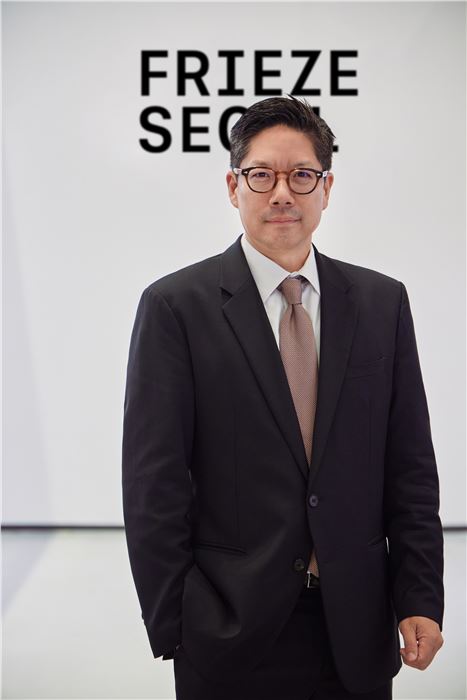
RJ: What makes the Korean market competitive compared with other East Asian markets?
PL: South Korea is a favorable place to transact and is generally business-friendly. It is easy to remit funds, has strong logistical infrastructure for the art community, and has favorable policies on tax and customs. I expect the business climate to remain this way, continuing to make Korea one of the most straightforward markets in the region to buy and sell in.
RJ: What about the strength of its art ecosystem?
PL: Korea has a strong arts infrastructure, and this includes art fairs. Korea has a varied landscape that caters to a broad array of constituencies, which, ultimately, is good for Korea's galleries and artists overall. The best fairs have a focus and identity. Our focus stays on what we do well, and on giving space to Korean and regional voices within an international fair.
RJ: Which international markets are the most dynamic for Korean artists?
PL: What's particularly exciting is how many different points of entry there are into Korean art internationally right now. The British Museum's exhibition of the Lee Kun Hee Collection opens in October and is its first major exhibition on Korean art and history in more than 40 years. This autumn brings RM's personal collection to SFMOMA, its only U.S. presentation, putting Korean modernism in dialogue with the museum's own holdings. LACMA will showcase works by contemporary Korean and Korean diasporic artists, curated by Christine Kim and Harry C.H. Choi. In the past few years, we have seen important historic Korean avant-garde art highlighted at the Guggenheim and Hammer, young Korean artists such as Mire Lee and Anicka Yi at the Tate Modern Turbine Hall, and scores of others at important international biennales. This range says something about how open the conversation has become. And there's a strong generation of emerging Korean artists coming through that I think is worth watching just as closely.
RJ: What is your advice to collectors interested in exploring the Korean art market?
PL: I'd encourage them to explore the diversity of the gallery scene here, and the broader cultural ecosystem around it – that's really where the depth of this market shows itself. Neighbourhood Nights is a good place to start: in Euljiro, you can discover emerging Korean artists, and in Samcheong you'll meet more established masters, often within a few streets of each other. Each district has its own distinct viewpoint, and together they say a lot about how much depth this scene has.
RJ: What makes Frieze Seoul unique compared with other major art fairs in Asia?
PL: I think what’s most interesting is that the city has developed its own distinct identity rather than measuring itself against other art centers. What sets Frieze Seoul apart is discovery with rigor – an Asian-majority ecosystem alongside real international scale, and a serious curatorial point of view you can see this year in sections like Material Practice and Spotlight.
RJ: What purpose do these two new sections serve?
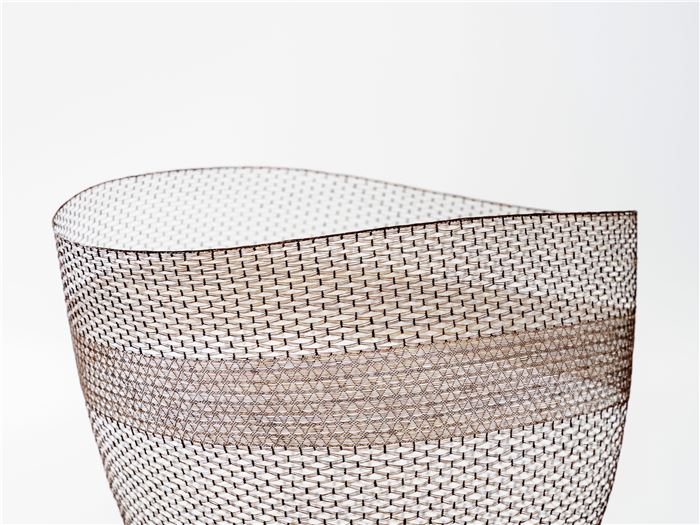
PL: Both sections mark a real evolution as we approach our fifth edition. Material Practice, curated by Hyeyoung Cho, responds to the growing convergence of contemporary art, craft and design, bringing together artists working in ceramics, textiles, glass, metal and other material practices that challenge traditional disciplinary boundaries. It draws on Korea and Asia's own deep traditions of making. Spotlight, curated by Wonseok Koh, reflects a real appetite among Korean and international audiences for art-historical narratives beyond the dominant Western canon: 15 overlooked twentieth-century artists whose work and significance are still being written into that history.
RJ: Why has Frieze Masters been replaced for this edition?
PL: Frieze Masters isn't a separate section this year, but I wouldn't say we've moved away from historical art by any means. We've found a format that lets us tell those histories in a more focused way for this fair, through solo presentations. Most of the galleries that showed in Frieze Masters are in the fair’s Galleries section, and this will allow them a wider spectrum to showcase their programs without strict parameters to show only historical work.
RJ: South Korea is a leader in digital and technology-driven art. How does Frieze Seoul reflect and support this emerging scene?
PL: Frieze Seoul will not showcase digital or technology-driven art per se. Whatever medium an artist chooses to use will naturally be reflected as a tool for expression. We do showcase performance art, as well as video and film, and we look forward to continuing to support interesting programming in these areas.
RJ: Beyond the art market, Frieze Seoul has developed initiatives such as the Busan Biennale x Frieze Film program, the Frieze Seoul Artist Award, and Frieze Music. How are they shaping the fair?
PL: Our fair program matters as much as the booths themselves, and it’s something we take seriously. Frieze Seoul continues to expand across the city with a program and presence that introduces international audiences to Korea’s extraordinary ecosystem, connecting visitors with Seoul’s galleries, institutions, artists and cultural communities.
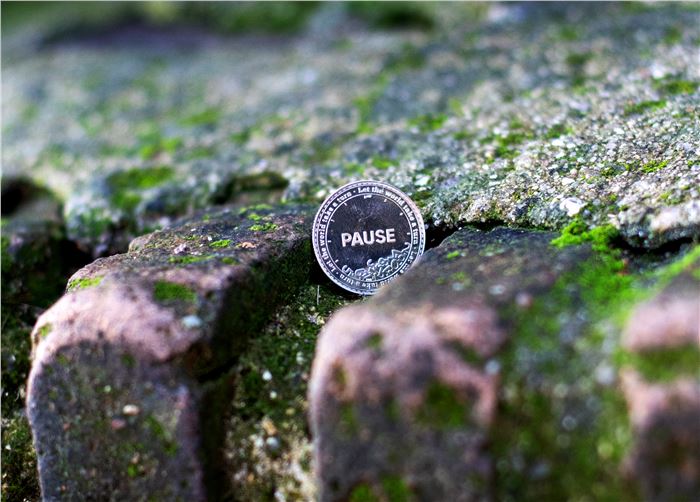
Our programs also create points of engagement with Seoul’s contemporary culture beyond visual art. Frieze Music brings contemporary art and live music together, while the Frieze Film collaboration with the Busan Biennale, presented off-site at SONGEUN Art and Cultural Foundation, introduces fair visitors to contemporary moving-image practice and Korea’s institutional networks. Ryan Gander’s The Find Seoul transforms the city itself into a citywide public artwork, with 16,000 collectible coins hidden in plain sight across Euljiro, Hannam, Cheongdam, Samcheong and COEX.
The Frieze Seoul Artist Award further extends what the fair does by supporting artists at pivotal stages of their careers. Yagwang is this year’s recipient, following Hannah Woo, Goen Choi and Im Youngzoo in previous years.
RJ: Some have described such evolution as a form of “biennalisation” …
PL: I’d resist the word “biennalisation,” though. The ambition isn’t to become a biennial; it’s to make sure our fair week connects directly with Seoul’s wider cultural ecosystem.
RJ: You have just announced a new location for Frieze Seoul from 2027. How will this move affect the fair’s collaboration with Kiaf, given that the two fairs will be held at different venues?
PL: Frieze Seoul will continue to take place in partnership with Kiaf, working together in support of the Korean art scene and its audiences through collaborative programming.
Source: MutualArt


Further reading
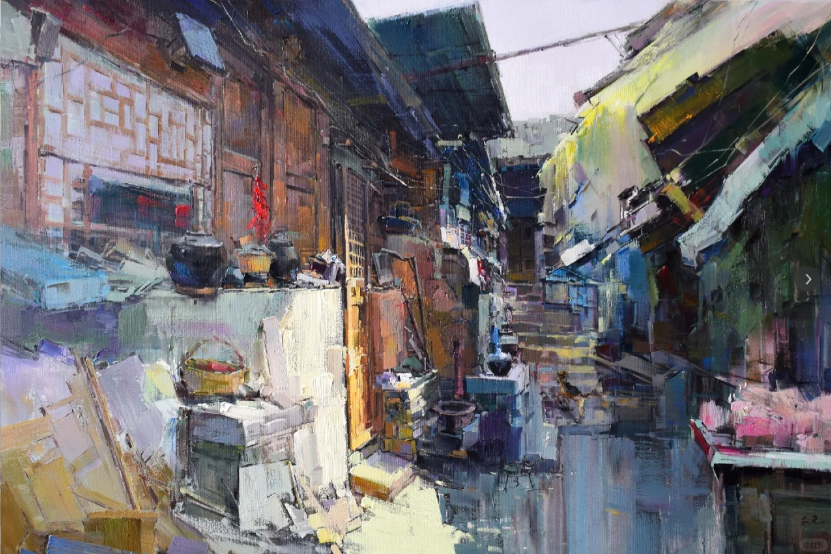
Artist of the Day | Zhao Yanliang
Zhao Yanliang was born in 1986 in Langfang, Hebei Province. He graduated from the Hebei Vocational Art College, pursued advanced studies at the Tianjin Academy of Fine Arts, and graduated from the Advanced Research Class of the Bai Yuping Studio at the Beijing Fine Art Academy in 2020.
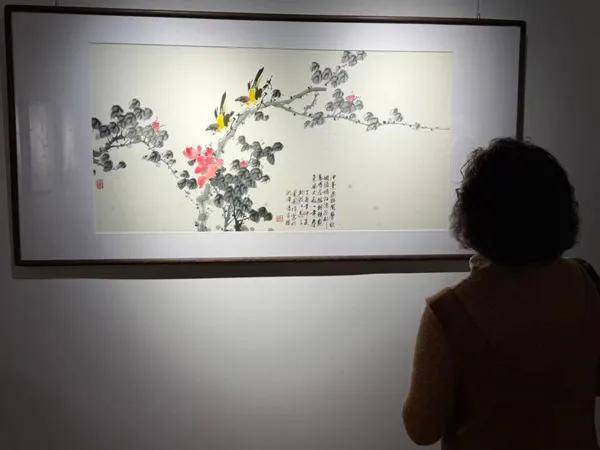
61 Works Showcase an Artistic Quest: "Endless Faint Fragrance – Zeng Jingxiang's Freehand Flower-and-Bird Painting Exhibition" Opens in Xiangtan
The exhibition features 61 of Zeng's freehand flower-and-bird works. It runs until November 21 and is open to the public free of charge.
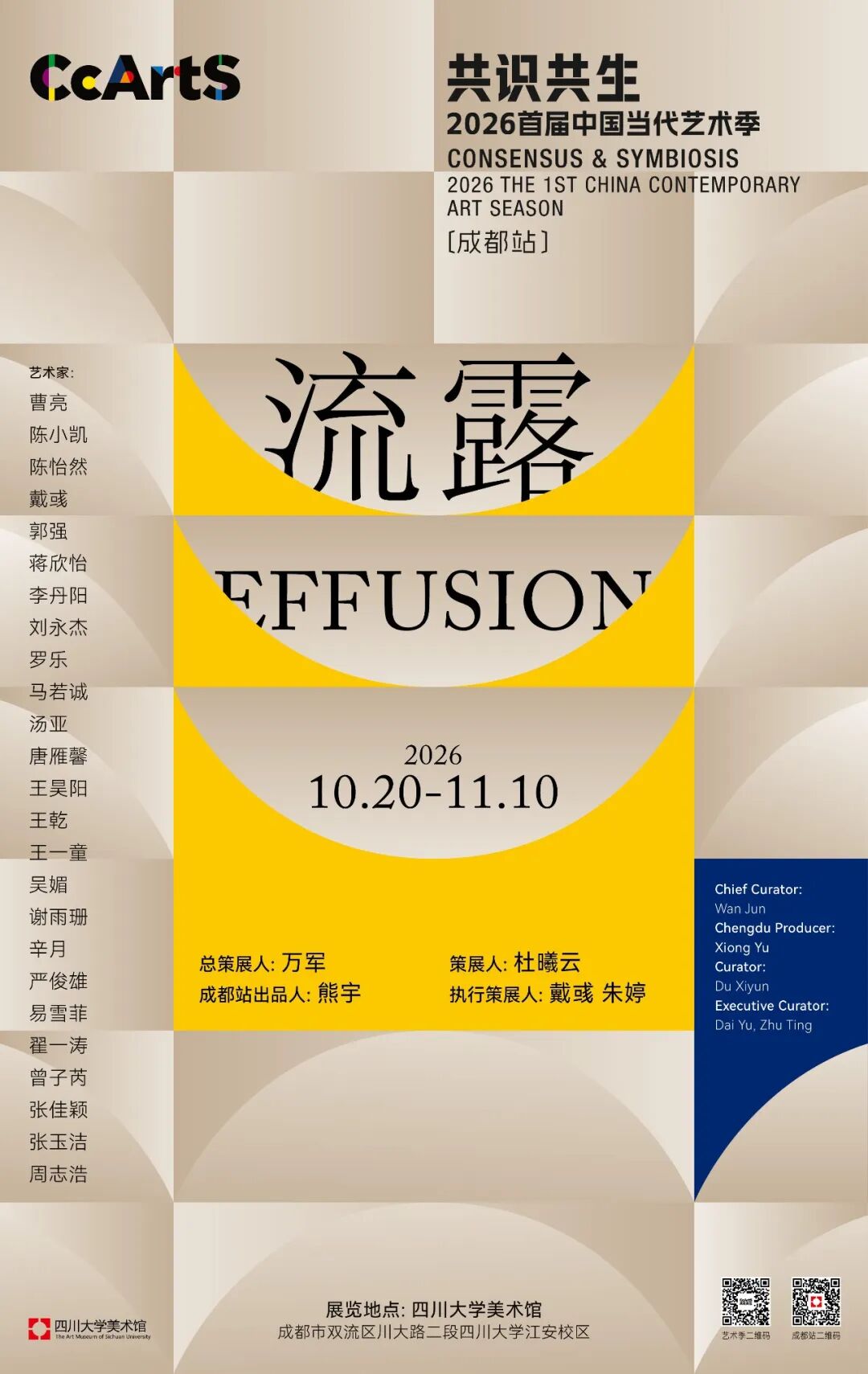
EFFUSION | Consensus and Symbiosis — The 1st Chinese Contemporary Art Season 2026 • Chengdu Station
We are living in an era of highly surplus visual information. Images are produced, disseminated, and reproduced at an unprecedented speed, and artificial intelligence has made image generation even easier. While the tools of expression are multiplying, discovering a truly personal artistic language does not necessarily become any easier.