"Beijing Abstract": 11 Artists Gather at Common Art Center to Author a "Non-fictional Metaphysic" Amidst the Frictions of Reality
Taking "Non-fictional Metaphysics" as its core concept, this exhibition seeks to explore the complementarity and struggle between globalization and localization. It illustrates how "Beijing Abstract" dismantles pre-established fictions to reshape an existential, metaphysical stance within the soil of reality.
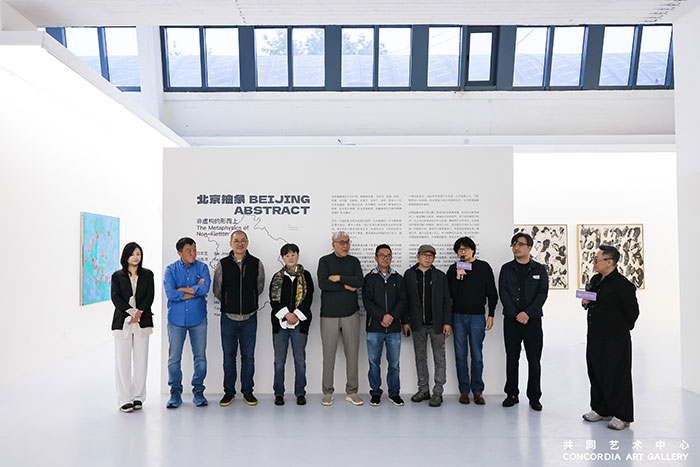 Opening Ceremony
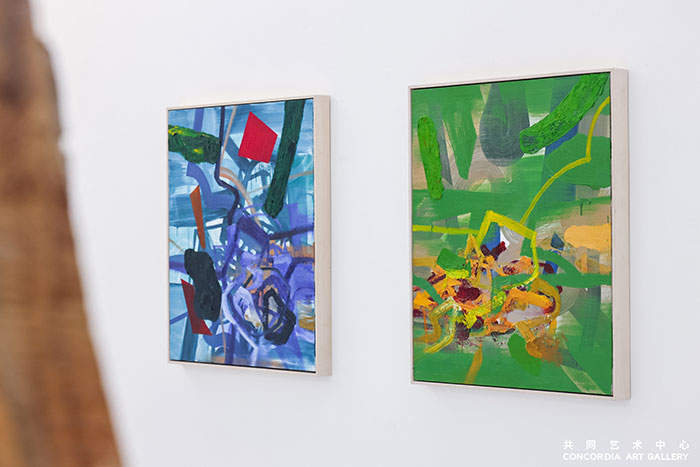
On October 17, 2026, the exhibition "Beijing Abstract: Non-fictional Metaphysics" opened at the Common Art Center in Beijing's 798 Art District. Curated by Wang Jiang, the exhibition comprehensively presents recent masterpieces by eleven artists: Bai Jingsheng, Feng Lianghong, Li Di, Liang Hao, Lin Jing, Ma Kelu, Ma Shuqing, Mao Lizi, Meng Luding, Tan Ping, and Yuan Zuo.
As a loosely organized artist collective founded in 2017, the 11 members of "Beijing Abstract" have taken diverse paths and achieved unique individual acclaim. Their creative practices span the history of Chinese contemporary art. Deeply rooted in the spiritual undertones of Beijing’s local terrain, they simultaneously establish connections and engage in dialogues with the lineage of Western abstract art, generating a dynamic tension through their differences.
Taking "Non-fictional Metaphysics" as its core concept, this exhibition seeks to explore the complementarity and struggle between globalization and localization. It illustrates how "Beijing Abstract" dismantles pre-established fictions to reshape an existential, metaphysical stance within the soil of reality.
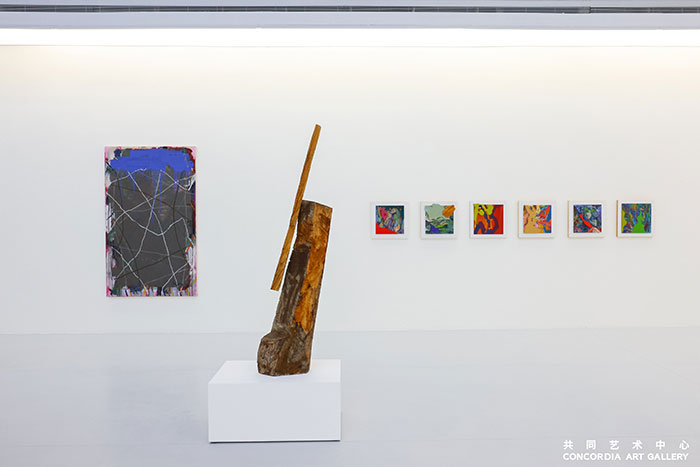
The Common Art Center has long focused on the pluralistic practices of Chinese contemporary art, and this exhibition serves as a phased review of the "Beijing Abstract" collective's activities over the past decade. In the exhibition preface, curator Wang Jiang posits: If Western formal autonomy has, to some extent, constructed a "formal fiction" regarding pure visuality, and the realism that once dominated China easily slips into an ideological "conceptual fiction," then the foundational hue of "Beijing Abstract" differs from both. It is highly associated with China's reality and is inseparable from the symbolic implications of Beijing as a city. Its "non-fiction" is not a documentary-style reproduction of scenes, but an existential posture that deconstructs established visual schemas and discards conceptual pretensions.
11 Artists, 11 Grammars
Judging from the works on display, the most striking feature of "Beijing Abstract" is the autonomy of their individual visual languages. The collective has "no manifesto, no program, no constitution, no conceivable constraints, and no unified artistic proposition." In curator Wang Jiang's view, this framework of action, based on a logic of elimination, prevents the group from being absorbed into grand macro-narratives. Keeping boundaries between each other is for the sake of freedom; maintaining the independence of self-consciousness is to resist disciplinary constraints.
However, a loose structure does not mean a lack of consensus. Artist Yuan Zuo noted in an interview that what brings these individuals together is friendship and shared personal experiences—especially their time studying and living abroad—which fostered a similar understanding and perspective on contemporary art. "Everyone's understanding of art is not exactly the same, or rather, there are significant differences. We deeply respect each other's ideas, experiments, and creations, but we can also be quite unforgiving when pointing out flaws, debating, critiquing, or encouraging one another," Yuan Zuo said. He believes that this mutual "critique" among the artists might be the collective's most vital aspect. He particularly mentioned that artists like Mao Lizi, Feng Lianghong, and Meng Luding all exhibit changes in their new works here. Meng Luding, for example, has begun creating three-dimensional works—a massive leap and a completely novel experiment.
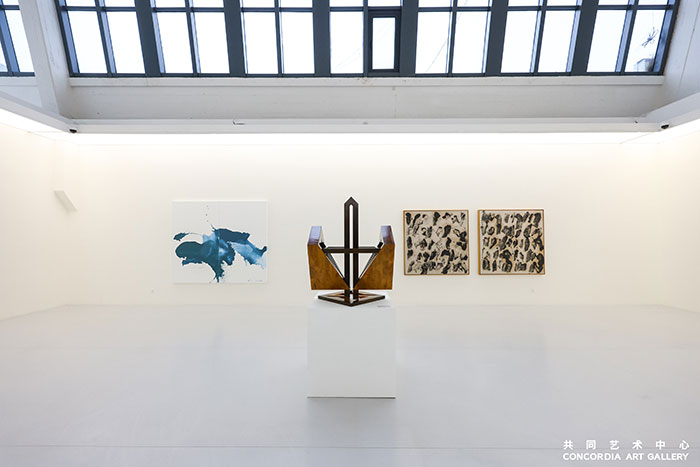
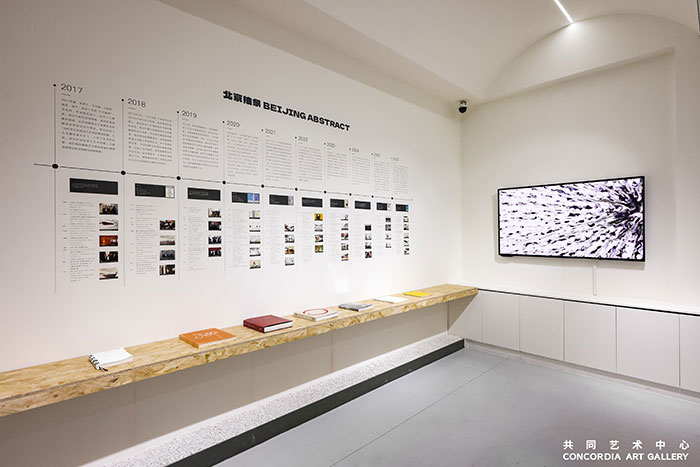
The differences within the practices of the 11 artists also manifest in diverse directions: Mao Lizi, once a key member of the "Stars Group," infuses his abstraction with profound Chinese essence; Lin Jing, influenced by family heritage since childhood, bridges the gap between art and design, turning abstraction into an effortless perceptual choice; Bai Jingsheng, steeped in avant-garde currents and having lived in the U.S. for a long time, balances rationality and emotion on his canvases; Liang Hao uses sculptural materials and multi-dimensional forms to imply the existence of space and time; Ma Kelu’s "Ada" series forms a unique style through methods of writing, rubbing, and striking; Feng Lianghong continues his ongoing abstract experiments on canvas; Li Di lived in Germany for two decades, while Ma Shuqing’s creations revolve around conceptual explorations that began during his own studies in Germany; Meng Luding’s recent works pivot toward the three-dimensional; Tan Ping and Meng Luding drive the education of abstraction and free painting at the Central Academy of Fine Arts (CAFA), while Yuan Zuo dedicates himself to academic construction at the Academy of Arts & Design, Tsinghua University and various museum institutions. Their commonality lies in that most view abstraction as an adaptable language to be organized and reshaped, rather than a fixed style. Their divergence lies in the tone, grammar, and somatic experiences each employs to organize this language.
Abstract Art in China: Dismantling Two "Historical Fictions"
The exhibition categorizes the discursive dilemma that Chinese abstract art has long faced into two "historical fictions": Firstly, placing Chinese abstraction within the evolutionary lineage of Western linear modernity, thereby degrading it to a belated, imitative stylistic response. Secondly, restricting the discourse to closed circles through narrow regionalism and elitist narratives. Curator Wang Jiang argues that the reality "Beijing Abstract" confronts is far more complex than this dual fiction: globalized formal language and local survival experiences coexist and entangle, while the physical materiality of the painting medium constitutes the "interface where non-fiction occurs."
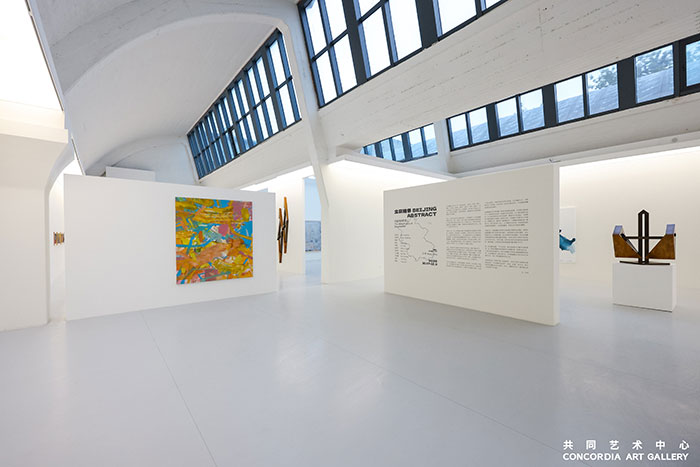
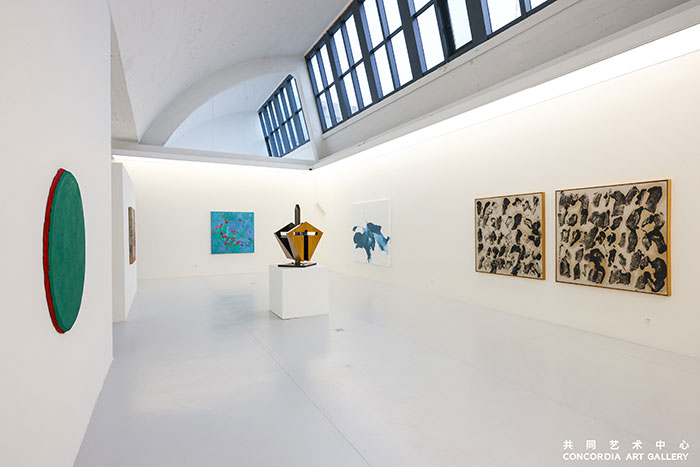
This assessment is corroborated by the members' own experiences. Bao Yu, principal of the Common Art Center, recalled in an interview that the initial gathering of "Beijing Abstract" was related to a Hong Kong exhibition curated by Peng Feng. The participating Chinese abstract artists mostly had studios in Beijing and shared overseas backgrounds. She emphasized that Beijing, as a hub for artists and studios, presents an inclusive and pluralistic face; it is not a place defined by specific doctrines, schools, or concepts. "When you look at their works, everyone's expressive style, concept, and even technique are quite different, sometimes drastically so. But they are all researching abstraction, just from completely different angles." According to Bao Yu, beyond making art, what binds them is friendship and familial emotional ties, which is what sustains the collective.
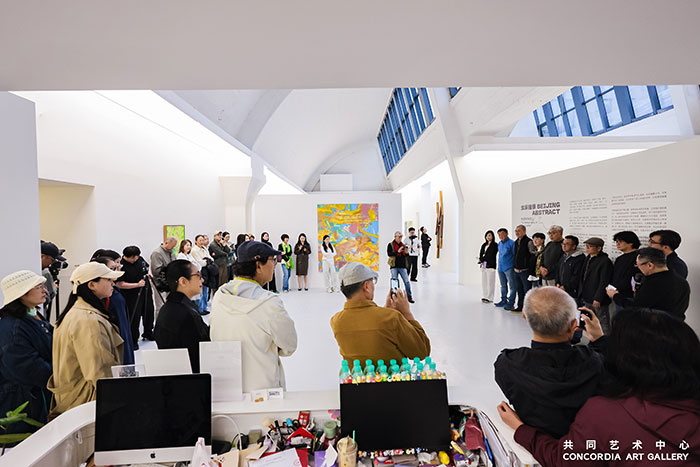
The modus operandi of "Beijing Abstract" is encapsulated by the term "Dun Cuo" (顿挫 - cadence / pause and transition). "Dun" represents the pause, the sinking, and the presence of force; it is the friction and resistance of local experience against the smooth flow of globalized symbols. "Cuo" signifies the proactive turn and cautious reflection amidst these reality frictions. Between pausing and transitioning, individual existence resists assimilation, and localized abstraction continuously questions the boundaries of universal theory.
This also responds to the path of "Abstract Art in China." The curator notes that Chinese abstraction should neither be viewed as a delayed or incomplete version of Western stylistic development, nor should it be confined within localist circles. "Beijing Abstract" reshapes universal language through cross-lingual practice: Western visual language enters the local context, while the Eastern spirit moves toward the global stage. The group retains differences in internal pitch and timbre; there is no uniform shouting, nor are there enforced harmonies. Beijing's dry air, sandstorms, red walls, and gray bricks, alongside its central axis, ring roads, and perpendicular street grids, constitute an immense scale of abstraction, bringing a distinct regional breath to the abstract art generated here. Yet simultaneously, Beijing is a crucial node of globalization; the local and the global are not mutually exclusive.
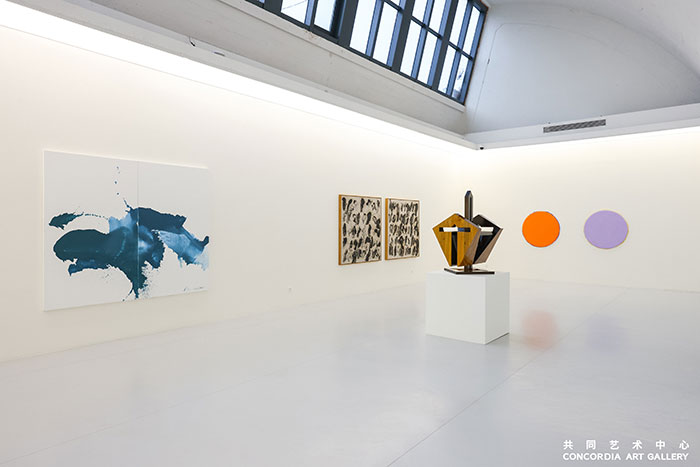
Yuan Zuo maintains a cautious attitude toward the very label of "abstraction." In his interview, he frankly admitted that initially, he did not quite agree with using the word "abstract" in the group's name. He believes that abstract art in the specific context of the West had essentially concluded before the advent of Minimalism, later morphing into a philosophical and linguistic issue, with diminishing ties to painting. "Speaking for myself, I don't think what we are doing now has a particularly important relationship with abstract painting. In my painting, I still emphasize intuition, instinct, and the subconscious; when these three things occur simultaneously and persist until the final touch on the canvas, creating visual impact, that is the most important thing in painting." This statement precisely unveils the internal tension of "Beijing Abstract": The group gathers under the name of "abstraction," yet refuses to be limited by the conceptual history of "abstraction."
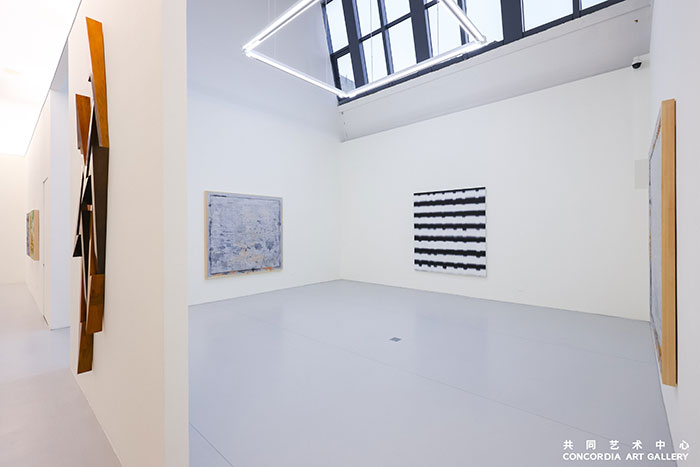
Continuing to Act "After the End of Abstraction"
From 2017 to 2026, the loose gatherings of "Beijing Abstract" over the past decade mark an organizational form distinct from stylistic schools or manifesto-driven collectives. It does not offer an artistic paradigm eager to be categorized but presents an existential stance closely attuned to the here, the now, and the self. The eleven artists use their respective languages to respond to the entanglement of global formal language and local survival experiences, shifting abstraction from a question of style to questions of language, subjectivity, and reality.
For the audience, this exhibition is not only a concentrated viewing of the recent works of eleven artists but also an on-site inquiry into how "Abstract Art in China" can break free from imitative narratives and closed circles, and how it can accumulate the power of "Dun Cuo" (pause and transition) within the fissures of reality. As the curator stated, through the negation of negation, ultimate answers cease to exist. Abstraction becomes a proposition open to both history and reality. Between the crevices of history and under the gravity of reality, the artists project their uniquely distinct echoes into the vast world.
Source: art.china.cn

Further reading
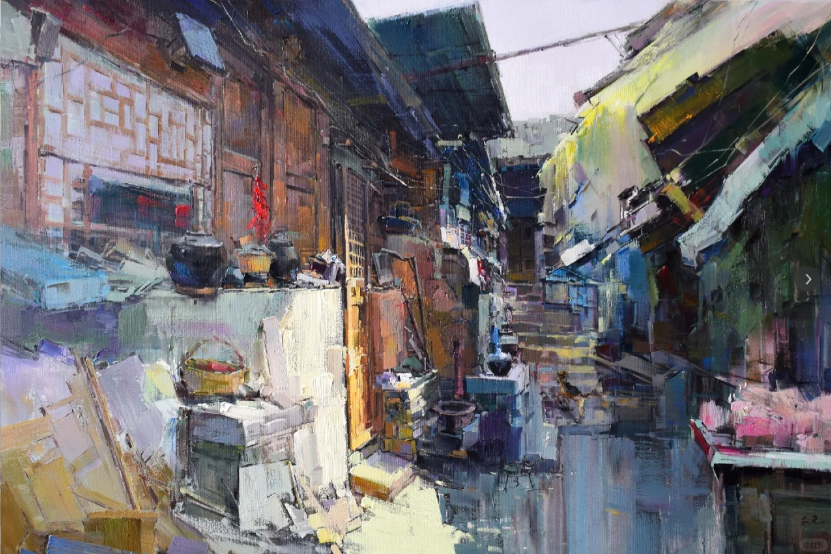
Artist of the Day | Zhao Yanliang
Zhao Yanliang was born in 1986 in Langfang, Hebei Province. He graduated from the Hebei Vocational Art College, pursued advanced studies at the Tianjin Academy of Fine Arts, and graduated from the Advanced Research Class of the Bai Yuping Studio at the Beijing Fine Art Academy in 2020.
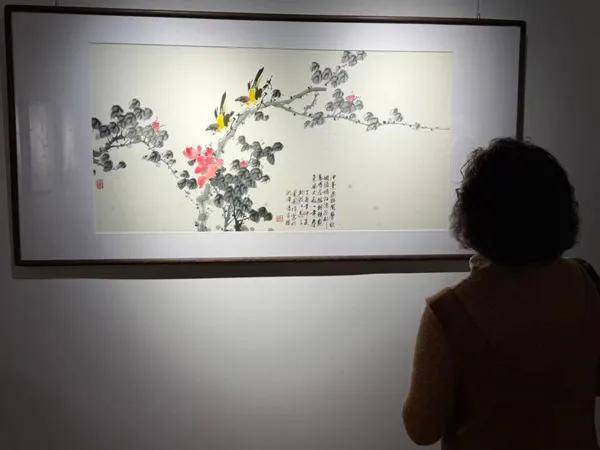
61 Works Showcase an Artistic Quest: "Endless Faint Fragrance – Zeng Jingxiang's Freehand Flower-and-Bird Painting Exhibition" Opens in Xiangtan
The exhibition features 61 of Zeng's freehand flower-and-bird works. It runs until November 21 and is open to the public free of charge.
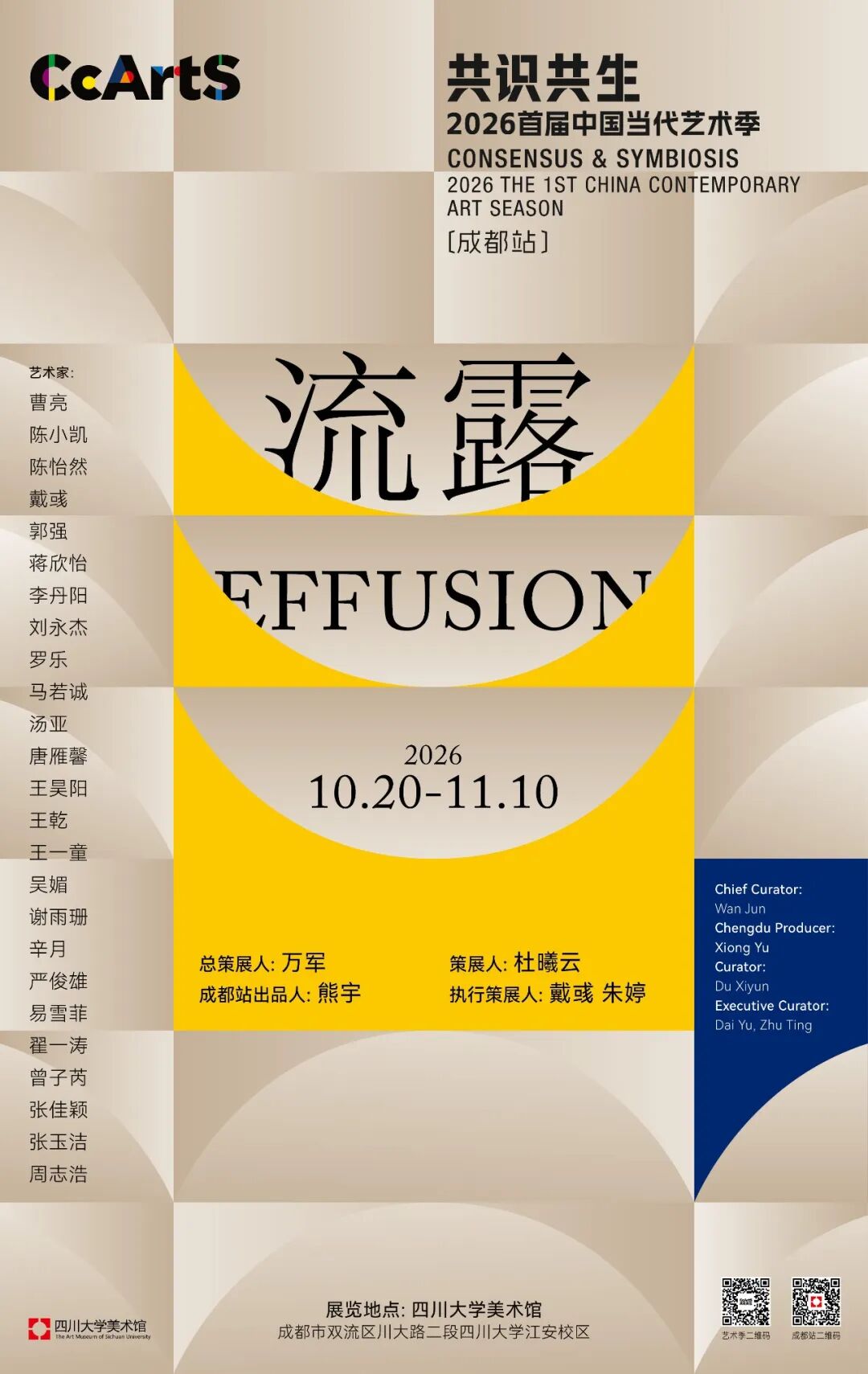
EFFUSION | Consensus and Symbiosis — The 1st Chinese Contemporary Art Season 2026 • Chengdu Station
We are living in an era of highly surplus visual information. Images are produced, disseminated, and reproduced at an unprecedented speed, and artificial intelligence has made image generation even easier. While the tools of expression are multiplying, discovering a truly personal artistic language does not necessarily become any easier.