The History of Chinese Contemporary Art
Since the turn of the 20th century, Chinese art has entered a new era in the history of global development, forging its own unique path. Between 1840 and 1949, China experienced some of the most dramatic and profound transformations of the modern era.
Modern Chinese art emerged against the backdrop of 20th-century warfare. Amidst the wave of modernization, traditional Chinese painting began to transform. As artists pondered the future of Chinese painting, two primary approaches gradually took shape: "integrating Chinese and Western art" and "innovating from within tradition." Since the turn of the 20th century, Chinese art has entered a new era in the history of global development, forging its own unique path. Between 1840 and 1949, China experienced some of the most dramatic and profound transformations of the modern era. During this process, "Traditionalism," "Integrationism," "Westernism," and "Populism" collectively formed the four major strategies used by Chinese artists to address societal realities.
Chinese contemporary art can generally be divided into three distinct phases:
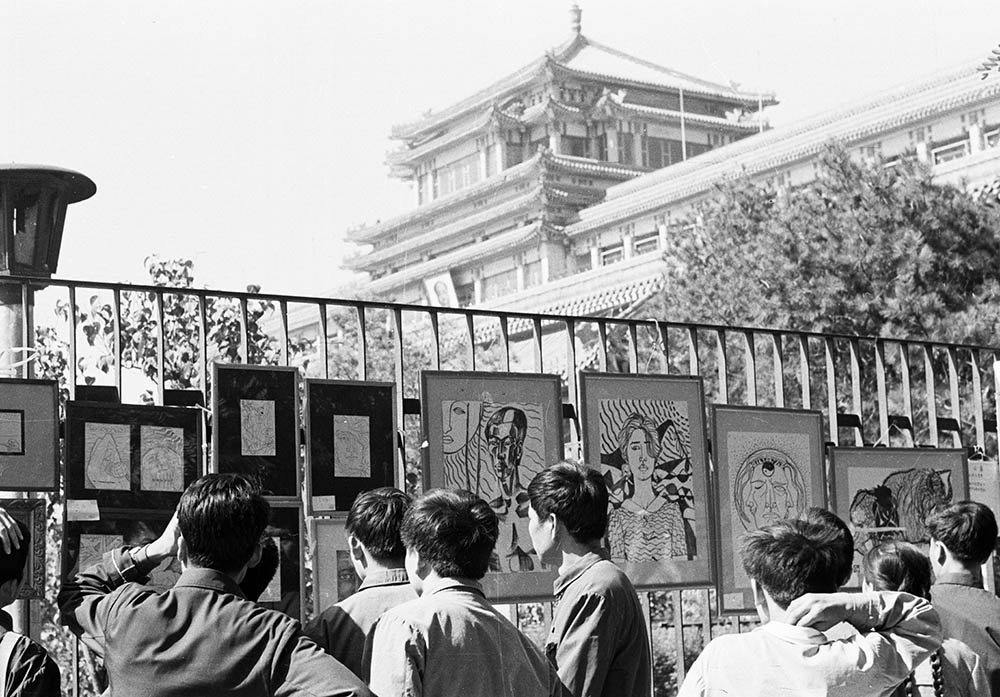
(1) Phase 1 (1979 – Early 1990s): This era was characterized by learning from Western avant-garde art. Key events included the Stars Art Exhibition (1979), the '85 New Wave, Xiamen Dada (1986), and the China/Avant-Garde Exhibition (1989).
(2) Phase 2 (1990s): Chinese contemporary art integrated into the international exhibition system. A major milestone was the dedicated Chinese pavilion at the 1993 Venice Biennale, accompanied by coverage of modern Chinese art in international media such as Art in America.
(3) Phase 3 (2000 – Present): This period has seen the industrialization of art production, the capitalization of the art market, and the commercialization of exhibitions and art criticism. There has been a significant proliferation of biennales, art districts, galleries, and auction houses.
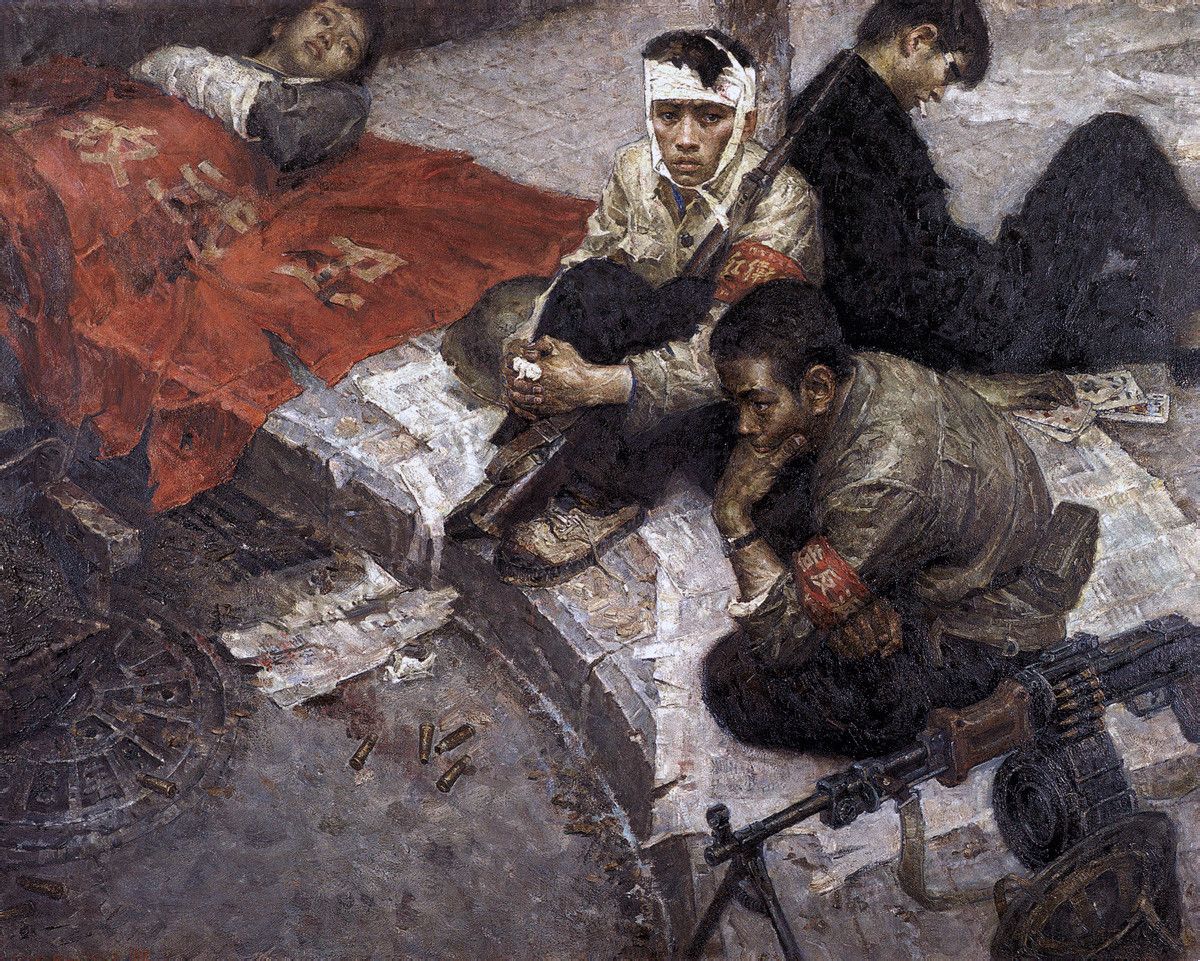
China's reform and opening-up in 1978 is widely regarded as the starting point of Chinese contemporary art. By 1979, the "Scar Art" phenomenon emerged, symbolizing the true dawn of this contemporary movement. At the 1979 National Art Exhibition, students from the Sichuan Fine Arts Institute displayed works reflecting on the absurdities of the era, including Gao Xiaohua’s "Why" and Cheng Conglin’s "Snow on X month X day in 1968". Luo Zhongli’s iconic oil painting "Father" was also born during this period. That same year, Wu Guanzhong published an article titled "The Formal Beauty of Painting" in Art magazine, boldly advocating for the pursuit of "formal beauty" in art.
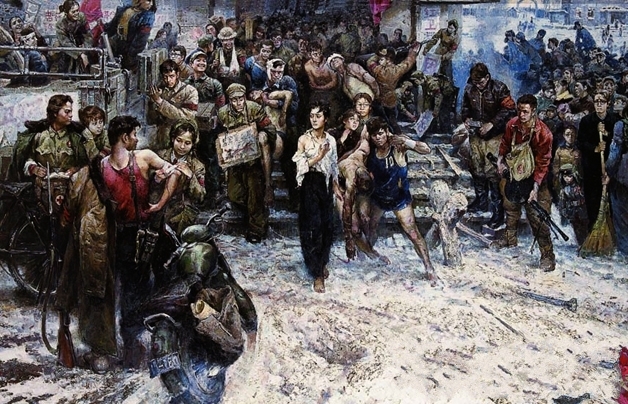
Around 1985, a wave of modern art rapidly swept across the Chinese art scene. A growing emphasis on "conceptual renewal" sparked what later became known as the '85 New Wave. On February 5, 1989, the momentous China/Avant-Garde Exhibition opened at the National Art Museum of China. By the early 1990s, new movements such as Cynical Realism, Political Pop, and Kitsch Art had taken center stage. The art market began to play an increasingly vital role, marked by events like the 1992 Guangzhou Biennial held at the Guangzhou Central Hotel.
Entering the 21st century, particularly after the 2008 Western financial crisis, Chinese artists leveraged economic resources to participate extensively in the Euro-American art system. Performance art also flourished; in 2000, the exhibition "Infatuation with Injury", curated by Li Xianting, was held at the sculpture studio of the Central Academy of Fine Arts. Meanwhile, conceptual and video art became prominent mediums, exemplified by works like Wang Gongxin’s "My Sun" (2000) and Wang Jianwei’s "Theater" (2002). However, globalization and marketization have also introduced new challenges. For instance, some artists have overlooked the importance of their local cultural context, leading to a noticeable trend of "fragmentation" in artistic creation in the new century.
Further reading
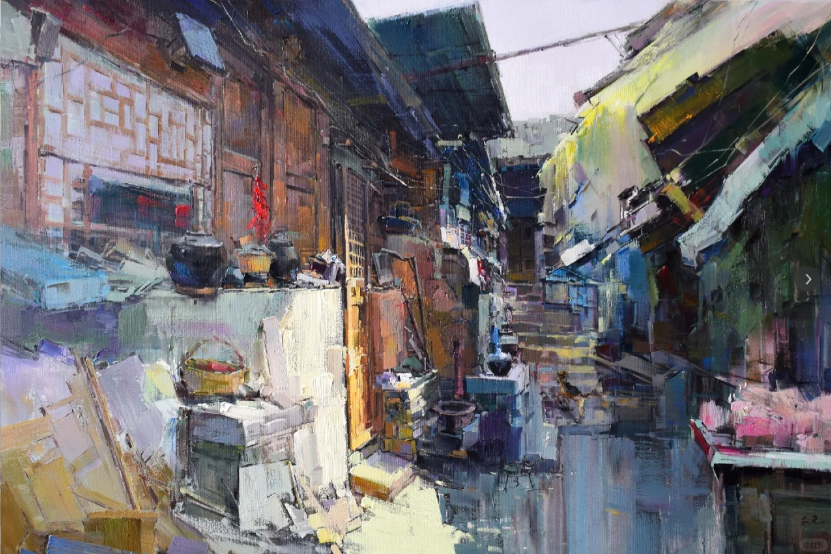
Artist of the Day | Zhao Yanliang
Zhao Yanliang was born in 1986 in Langfang, Hebei Province. He graduated from the Hebei Vocational Art College, pursued advanced studies at the Tianjin Academy of Fine Arts, and graduated from the Advanced Research Class of the Bai Yuping Studio at the Beijing Fine Art Academy in 2020.
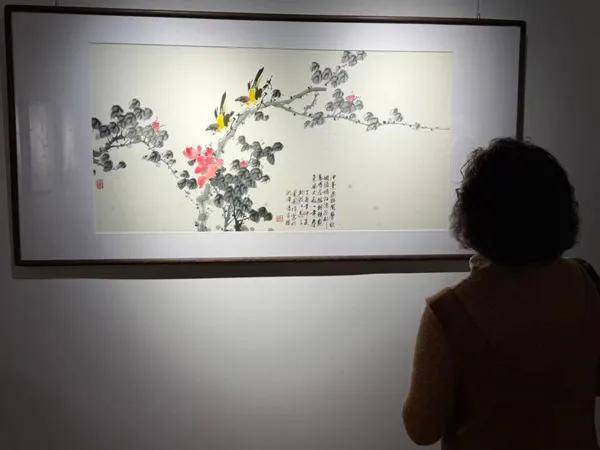
61 Works Showcase an Artistic Quest: "Endless Faint Fragrance – Zeng Jingxiang's Freehand Flower-and-Bird Painting Exhibition" Opens in Xiangtan
The exhibition features 61 of Zeng's freehand flower-and-bird works. It runs until November 21 and is open to the public free of charge.
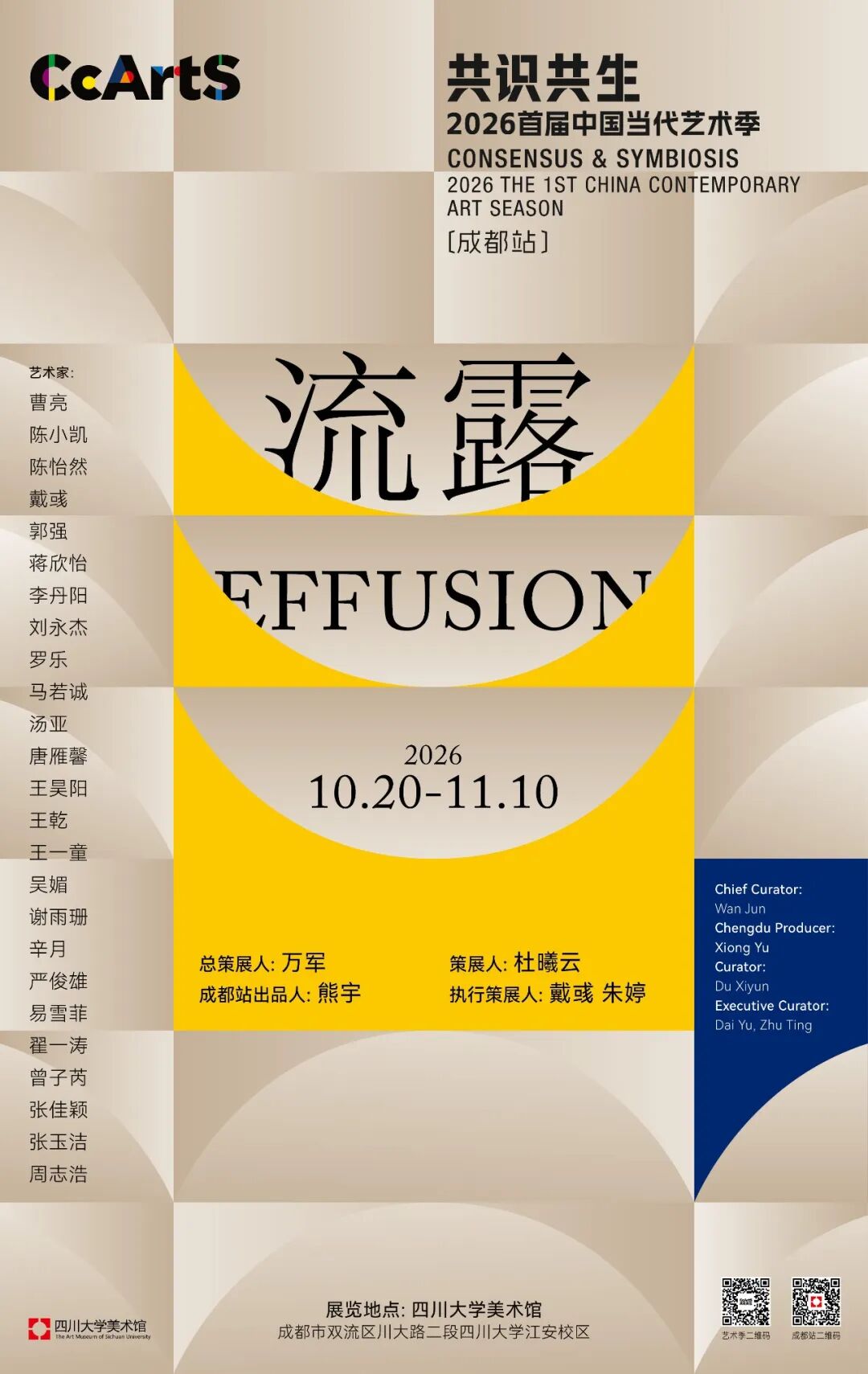
EFFUSION | Consensus and Symbiosis — The 1st Chinese Contemporary Art Season 2026 • Chengdu Station
We are living in an era of highly surplus visual information. Images are produced, disseminated, and reproduced at an unprecedented speed, and artificial intelligence has made image generation even easier. While the tools of expression are multiplying, discovering a truly personal artistic language does not necessarily become any easier.